Nanaimo residents are compassionate people.
We want someone experiencing addiction to survive an overdose. We want someone in a mental-health crisis to receive help. We want people living on our streets to be treated with dignity.
But compassion should also mean asking a harder question: Are we actually helping people get better?
For years, governments at every level have spent more responding to homelessness, addiction, mental illness and public disorder. Yet too many Nanaimo residents still see the same people cycling through crisis, emergency rooms, temporary housing and the justice system.
At the same time, families and businesses are increasingly concerned about disorder in public spaces, property crime and whether parts of our city feel safe.
We should expect better outcomes for everyone.
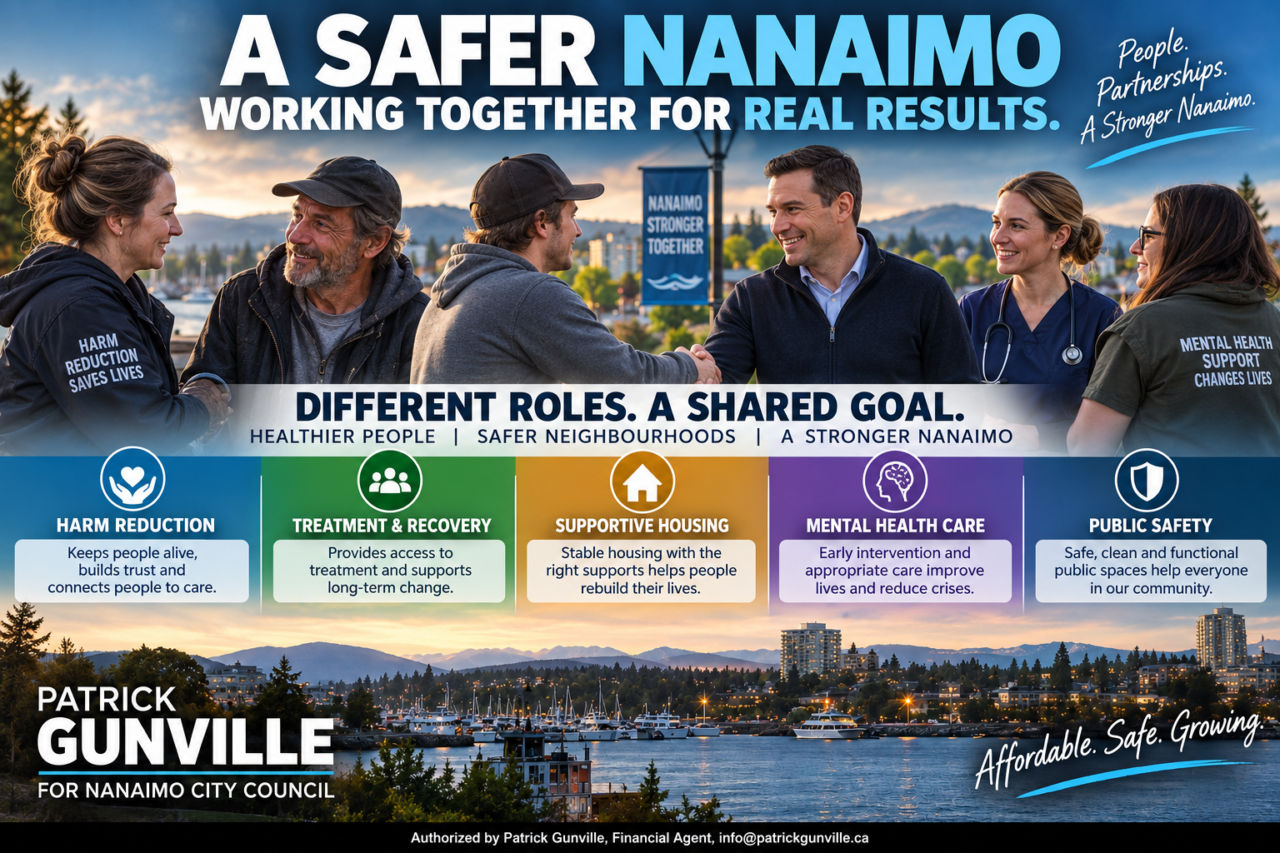
That means recognizing that keeping someone alive today and helping them build a better life tomorrow are not competing goals. Emergency intervention and harm reduction can save lives. But they cannot be the end of the conversation.
When someone wants treatment, treatment should be available.
When someone is suffering from severe mental illness, there needs to be meaningful intervention and appropriate care.
When supportive housing is needed, it should come with the supports necessary to help people stabilize and move forward.
When programs receive public funding, we should measure whether they are actually producing better outcomes.
And while we help people struggling with addiction, homelessness and mental illness, we must also maintain reasonable standards of safety and public order in our neighbourhoods, parks and downtown.
Compassion and accountability are not opposites. Neither are recovery and harm reduction. Neither are helping vulnerable people and protecting public spaces.
Ultimately, the outcomes matter more than the labels. The goal should be fewer people dying, fewer people living on the street, more people entering recovery, safer public spaces, and more people rebuilding stable and independent lives.
Municipal government cannot solve every part of this crisis. Health care, treatment and many social services are primarily provincial responsibilities. But Nanaimo can advocate relentlessly for the resources our community actually needs, coordinate effectively with other levels of government, demand accountability for local outcomes, and make public safety a priority in the decisions that are within the City’s control.
Success should not be measured simply by how much we spend or how many programs we create.
It should be measured by whether Nanaimo is becoming safer, healthier and more functional.
That is the standard I will bring to City Council.
But better outcomes won’t happen by accident.
This October, Nanaimo has a choice. We can accept the same outcomes, or we can insist on doing better — for people struggling with addiction and mental illness, for families and businesses, and for everyone who calls Nanaimo home.
We can be compassionate while expecting accountability. We can help people in crisis while protecting our public spaces. And we can focus our resources on solutions that produce real, measurable progress.
A safer Nanaimo should mean better outcomes for everyone.
If you share that vision, I would be honoured to have your vote this October.
Thank you for taking the time to read this.
Patrick Gunville
Candidate for Nanaimo City Council
Affordable. Safe. Growing.
P.S. This is the fifth in my series on Nanaimo’s future. In the weeks ahead, I’ll continue sharing practical ideas for building a safer, more affordable and more prosperous city — and what we can realistically do to make it happen.
If this message resonates with you, I’d be grateful if you shared it with a friend, neighbour or family member who cares about Nanaimo’s future.
Questions? Let’s talk about Nanaimo. Get in touch ➝